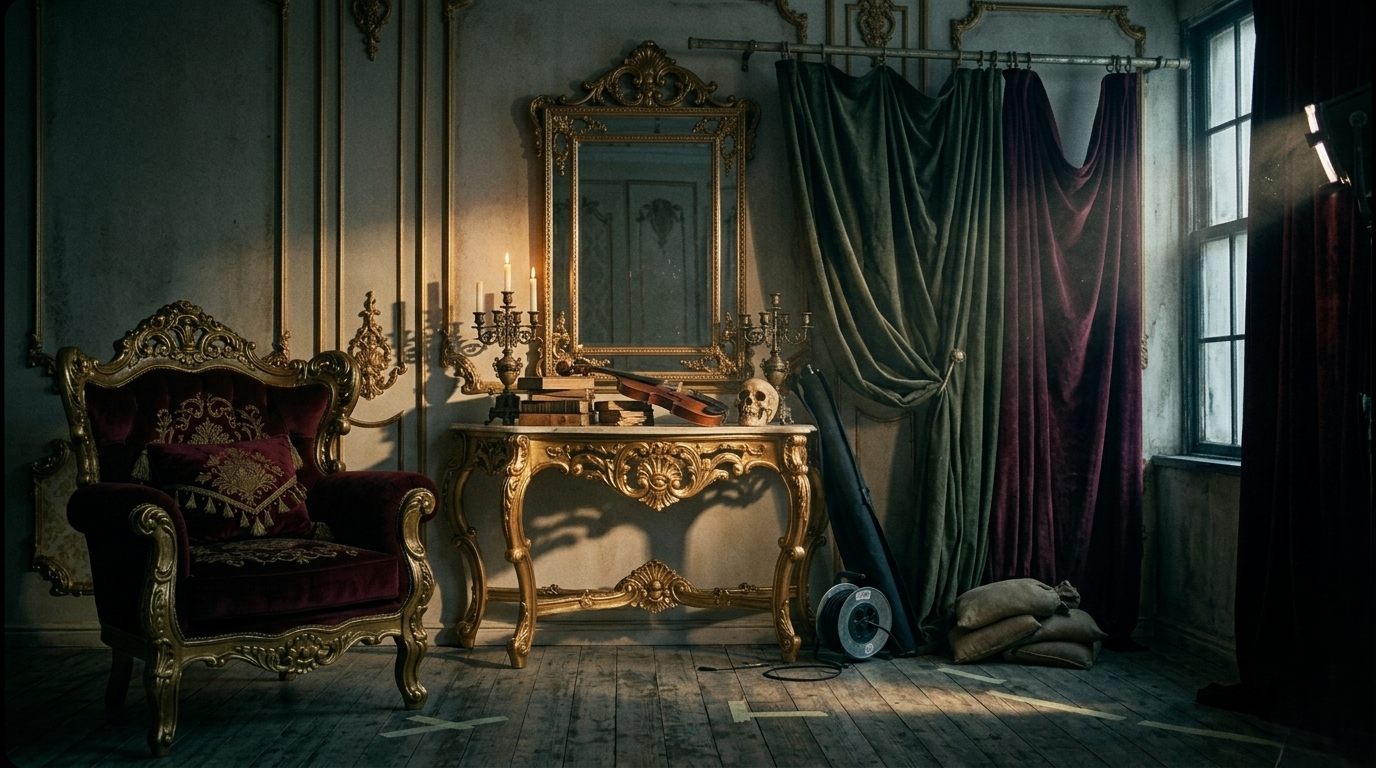
How to Create a Cinematic Baroque Set on a Low Production Budget
Baroque grandeur on screen has always commanded attention — from the gilded drawing rooms of period dramas to the opulent backdrops of high-end OTT originals. Yet the assumption that such visual extravagance demands an equally extravagant budget is one that holds many independent productions back. The good news is this: with the right eye for film furniture, a working knowledge of antique sourcing, and a few clever styling decisions, you can build a compelling baroque environment without draining your set decoration budget.
Whether you are an art director preparing a period thriller for a European streaming platform or a production house assembling a visually rich Hollywood feature, the principles of baroque set design are far more accessible than they appear. This guide walks you through every stage — from concept to execution — with a particular focus on how movie set furniture choices can anchor the aesthetic without multiplying your costs.
Understand What Makes Baroque Design Cinematically Powerful
Before sourcing a single item, it is worth understanding what baroque design actually communicates on screen. Originating in 17th-century Europe, baroque interiors were defined by dramatic contrasts, layered ornamentation, rich textiles, and a deliberate sense of abundance. On a film set, these elements translate directly into visual storytelling — evoking power, secrecy, decadence, and emotional tension.
For modern productions, particularly those set within a contemporary penthouse interior or a high-society environment, baroque film furniture creates an instantly recognisable visual language. Heavy carved wood frames, tufted velvet upholstery, and dramatic silhouettes set against clean architectural lines produce a layered aesthetic that reads brilliantly on both cinema screens and streaming displays.
Start With a Hero Piece — Build Outward
The most cost-efficient approach for any art director is to identify one hero piece of movie set furniture and build the entire scene around it. A baroque statement armchair with carved mahogany legs and gold-detailed upholstery, for instance, becomes the visual anchor of any room. Every supplementary item — side tables, mirrors, decorative objects — can then be sourced at a lower price point, as the eye naturally gravitates toward the centrepiece.
This method also performs remarkably well in close-framed shooting. Camera angles in modern productions rarely require an entire room to be dressed at full quality. A well-chosen hero piece of film furniture within a considered depth of field is often all that is needed to establish the period and the tone convincingly.
Source Smart: Antique Markets, Prop Houses and Trade Auctions
Across Europe, the antique furniture market offers exceptional value for production teams willing to invest time in sourcing. Cities such as Paris, Bruges, Vienna, and Porto host regular antique fairs where baroque and neo-baroque pieces are available at a fraction of retail cost. Many European prop houses also hold rotating stock of film furniture specifically curated for period and contemporary drama productions.
For productions based in the UK, auction houses including regional salerooms beyond London regularly offer carved gilt mirrors, upholstered carved chairs, and decorative console tables — all staples of baroque-inspired movie set furniture — at genuinely competitive prices. The key is to bid on pieces that read well on camera rather than those with premium provenance value.
Trade antique dealers in continental Europe, particularly in France and Belgium, are also worth approaching directly. Many offer short-term hire agreements specifically to production companies, which reduces both expenditure and logistical complexity after the shoot concludes.
Blend Baroque Pieces With a Modern Penthouse Aesthetic
One of the most visually compelling trends in current Hollywood and OTT production design is the deliberate blending of historic film furniture with architectural minimalism. A baroque carved console table placed against a floor-to-ceiling glass wall, or a tufted chaise longue positioned beside industrial concrete surfaces, creates an immediate dramatic tension that modern audiences find both sophisticated and cinematic.
This fusion approach is particularly effective for productions featuring penthouse settings, villain lairs, collector residences, or high-value European interiors. It also dramatically reduces your total set dressing costs, because you are using far fewer pieces to achieve a high-impact result. The contrast does much of the visual work — the movie set furniture simply needs to be well-chosen and properly lit.
Use Lighting and Textiles to Multiply Baroque Atmosphere
No guide to budget baroque production design is complete without addressing the role of lighting and layered textiles. Heavy velvet drapes in deep jewel tones — emerald, burgundy, midnight blue — are relatively inexpensive to source or hire and immediately transform the atmosphere of a scene. When combined with warm, directional lighting that casts dramatic shadows across carved film furniture, the effect is indistinguishable from a fully dressed, high-budget set.
Candlelight effects, whether practical or replicated through LED rigs, further enhance the baroque quality of any interior. Gilded mirrors, strategically placed to reflect both light and the camera’s best angles of your movie set furniture, add perceived depth and complexity to even the most modest set.
Final Checklist for Art Directors
Identify one baroque hero piece as the visual anchor of the set. Source film furniture from European antique fairs, prop houses, and regional auctions. Blend period pieces with contemporary architectural elements for a modern penthouse contrast. Use textiles, draping, and warm directional lighting to amplify baroque atmosphere. Negotiate short-term hire agreements with European antique dealers for movie set furniture. Frame shots to maximise the impact of key pieces rather than dressing entire rooms.
The Baroque Vision Is Within Reach
Creating a cinematic baroque set is less about the scale of your spend and more about the precision of your choices. With access to the right film furniture, a confident eye for contrast and texture, and a smart sourcing strategy across Europe’s antique and prop markets, even a lean production budget can deliver visuals that hold their own against any major studio release.
For art directors and production houses working on Hollywood features or premium OTT series, the baroque style remains one of the most rewarding visual languages to work with on screen. The key is knowing exactly where to look — and understanding that great movie set furniture does not have to carry a great price tag to make an extraordinary impression.