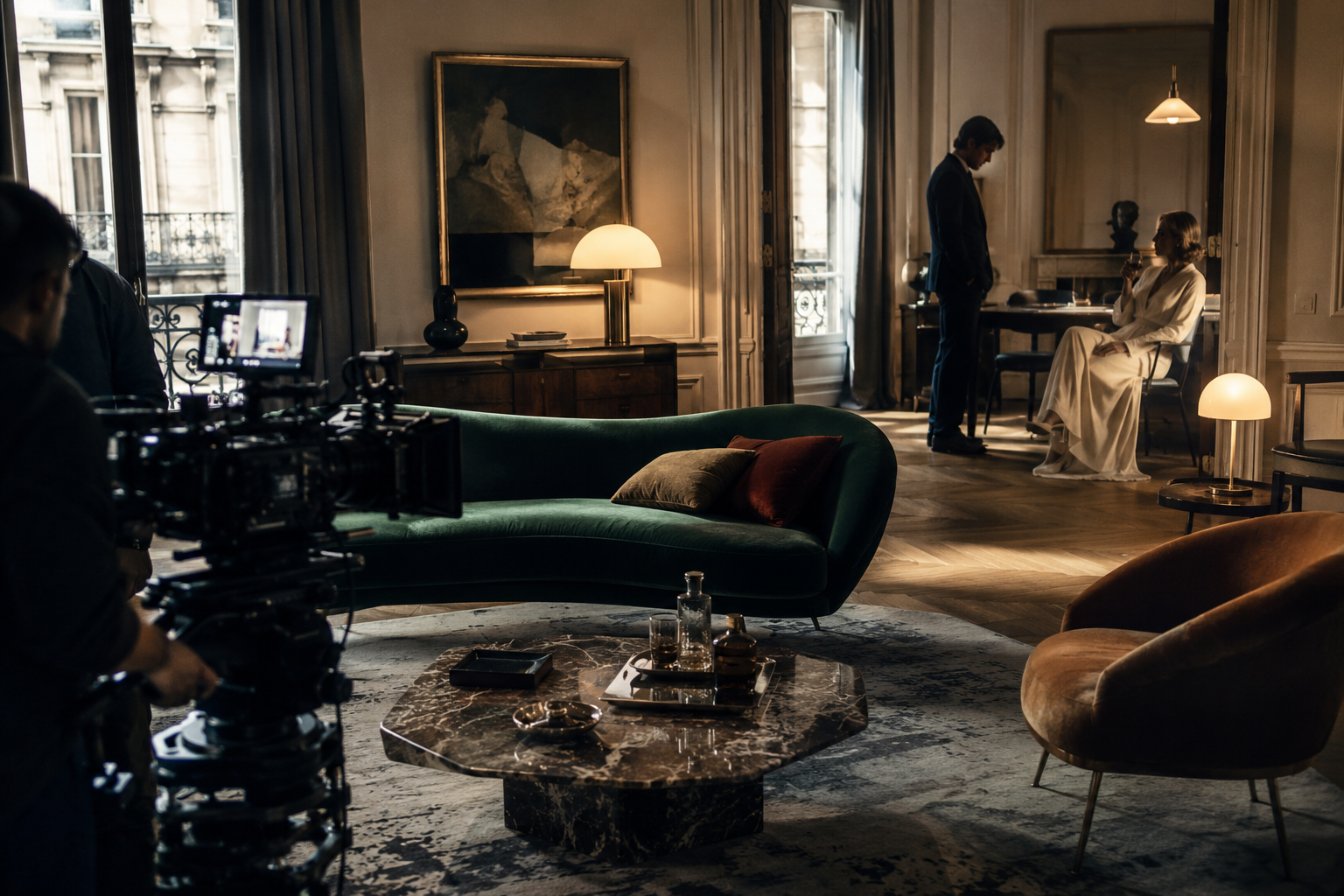
From Script to Screen Movie Furniture That Tells a Story
In European cinema, every visual detail carries meaning. From the velvet armchairs in an aristocratic Parisian apartment to the distressed wooden tables in an Italian neo-realist drama, movie furniture quietly communicates emotion, identity, and social hierarchy before a single line is spoken. For directors, stylists, and luxury production designers, selecting the right film props furniture is not only about decoration—it is about storytelling psychology.
The Emotional Language of Movie Furniture
Audiences often connect with characters through environments before understanding their dialogue. Carefully chosen movie furniture creates emotional cues that influence perception instantly. A sleek leather sofa may suggest wealth, control, or emotional distance, while vintage Scandinavian seating can imply artistic sensitivity and understated sophistication.
European filmmakers frequently use interiors as an extension of character psychology. In French and Italian cinema especially, homes and private spaces often reveal hidden tension, ambition, loneliness, or inherited privilege. This is why premium film props furniture has become essential in cinematic storytelling across luxury productions and streaming dramas.
The texture, color, and condition of furniture shape how viewers emotionally interpret scenes. Dark walnut dining sets may symbolize tradition and authority, while minimalist Nordic interiors can communicate freedom, modernity, or emotional isolation.
Character Development Through Interior Styling
Strong character development rarely relies on dialogue alone. In many acclaimed European films, movie furniture functions as a silent biography of the character.
For example:
- A successful art dealer may live among sculptural Italian furniture with clean geometric lines.
- A fading aristocrat may be surrounded by aging antique pieces that reflect lost influence.
- A young creative professional might inhabit a carefully curated apartment featuring eclectic vintage décor and soft textures.
These choices help viewers instantly understand social class, emotional state, and personal values. Luxury productions increasingly invest in curated film props furniture because audiences today notice authenticity. A poorly styled set can weaken immersion, while a thoughtfully designed space deepens emotional credibility.
Social Status and Luxury Visual Identity
European cinema has long celebrated architectural elegance and refined interiors. From modern penthouses in Copenhagen to classic estates in Vienna, movie furniture often signals power, prestige, and cultural identity.
Luxury-focused productions use furniture strategically to reinforce status differences between characters. High-end materials such as marble, velvet, brushed brass, and handcrafted oak communicate exclusivity without direct explanation. This visual storytelling approach feels natural and sophisticated, which is particularly important for upscale European audiences.
Today, premium film props furniture suppliers collaborate closely with production designers to source pieces that align with historical periods, regional aesthetics, and luxury lifestyle expectations. Whether filming a contemporary psychological drama or a period romance, furniture selection shapes the atmosphere viewers emotionally absorb.
Narrative Themes Hidden in Furniture Design
Furniture can also reinforce larger cinematic themes. Directors often use repetition in design language to symbolize emotional cycles or ideological conflict.
A rigid modernist interior may represent emotional repression. In contrast, layered vintage interiors can symbolize nostalgia, memory, or inherited trauma. In many European films, changes in movie furniture placement throughout the story subtly reflect character transformation.
For example, a once-pristine apartment becoming visually cluttered may represent emotional collapse. Similarly, replacing heavy traditional furniture with minimalist contemporary pieces can symbolize liberation or identity change.
This symbolic use of film props furniture adds depth that sophisticated audiences unconsciously appreciate. The best visual storytelling feels effortless because every design decision supports the narrative naturally.
Why Luxury Productions Prioritize Authentic Film Props Furniture
Modern viewers are visually educated. Streaming platforms, design media, and social content have increased public awareness of interior aesthetics. As a result, production teams across Europe now prioritize authenticity in every set detail.
Investing in quality movie furniture helps productions achieve:
- Stronger visual realism
- Enhanced brand perception
- Greater emotional immersion
- More cinematic sophistication
- Better audience engagement
Luxury furniture pieces also improve camera composition by adding texture, balance, and visual rhythm to scenes. Professional stylists understand that the right film props furniture can transform a simple set into a memorable cinematic environment.
Final Thoughts
In visual storytelling, furniture is never just furniture. It communicates class, emotion, history, and identity with remarkable subtlety. Across European cinema, thoughtfully selected movie furniture and premium film props furniture continue to shape how audiences interpret characters and narratives.
From intimate dramas to luxury streaming productions, the psychology of interior design remains one of cinema’s most powerful storytelling tools—proving that the right chair, table, or sofa can say more than words ever could.