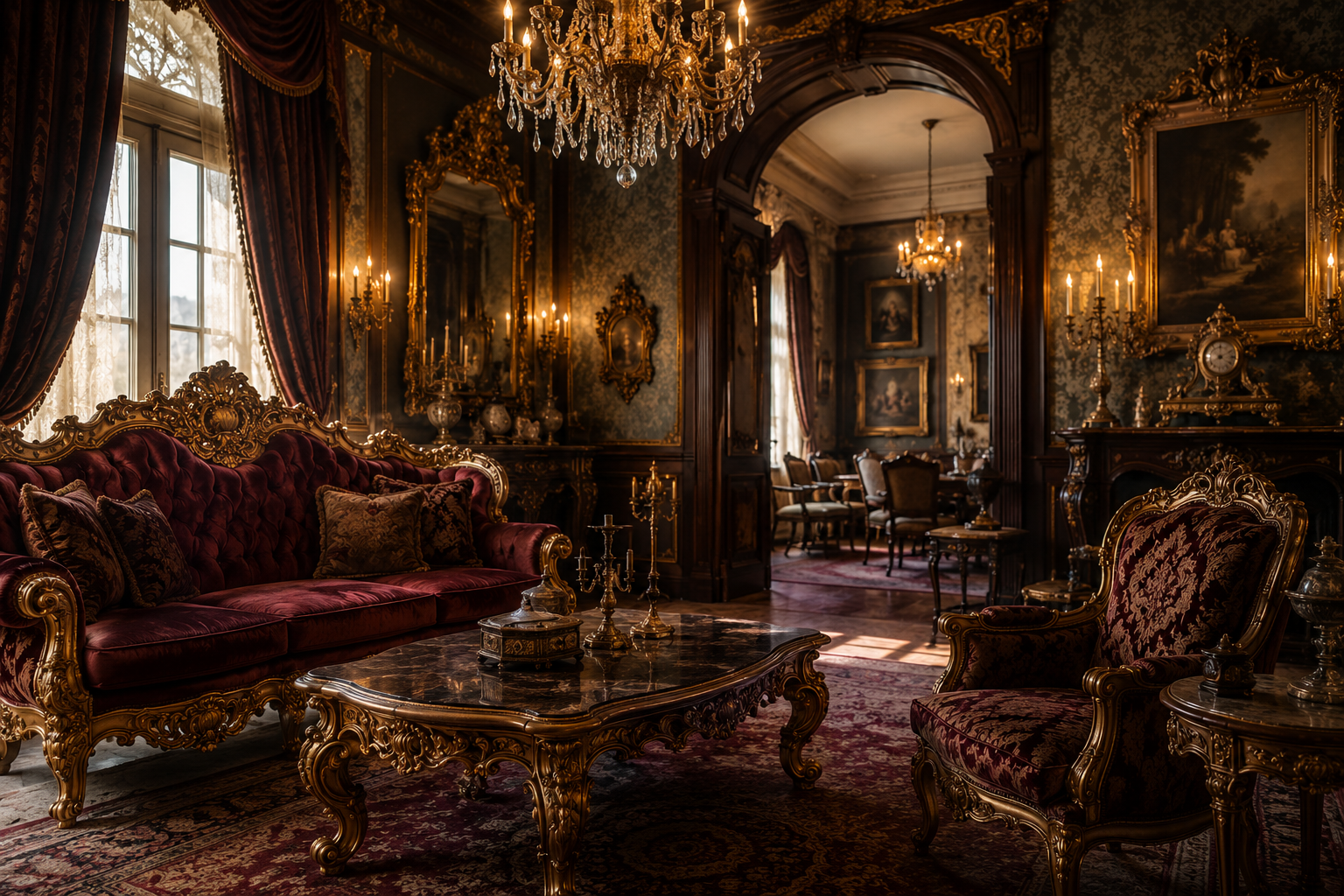
Baroque Furniture: Master the 70/30 Dominant Era Rule
Historical productions often demand more than beautiful antiques. They require visual discipline. Whether the project is a period drama, luxury commercial, museum exhibition, or premium hospitality showcase, audiences instantly recognise when interiors feel historically confused. The challenge becomes even greater when baroque furniture is paired with Victorian décor. Although both periods celebrate craftsmanship and grandeur, they differ dramatically in proportion, ornamentation, and atmosphere. The solution adopted by many European set decorators is the dominant era rule—a structured design principle that keeps one historical style visually dominant while allowing another to enrich the composition.
Instead of treating both styles equally, professionals frequently rely on a 70/30 balance, supported by a unified colour palette and thoughtful production design decisions. This method creates elegant interiors that appear intentional rather than overcrowded. For production houses across Europe, this approach also improves continuity, simplifies sourcing, and enhances cinematic storytelling while making every piece of baroque furniture contribute to a cohesive visual narrative.
Why Baroque Furniture and Victorian Design Often Clash
Both historical movements celebrate luxury, yet they express it differently. Baroque furniture embraces theatrical curves, dramatic carving, gilded detailing, oversized silhouettes, and expressive ornamentation. Every chair, console, or sofa is designed to command attention. Victorian interiors, by comparison, favour structured symmetry, darker woods, layered textiles, refined craftsmanship, and practical elegance. Decoration exists, but it is generally more restrained than the theatrical energy of Baroque styling. Without planning, mixing baroque and victorian elements can result in interiors where every object competes for attention. The viewer loses a clear focal point, reducing both historical credibility and emotional impact.European production designers avoid this by assigning visual hierarchy before selecting individual props.
Understanding the Dominant Era Rule
The dominant era rule is a professional styling principle used by experienced decorators and art departments. Rather than giving equal representation to multiple historical styles, one period defines approximately seventy percent of the environment while the second contributes the remaining thirty percent.This ratio allows every decorative choice to reinforce a single historical identity while introducing subtle stylistic contrast.
For example:
- 70% baroque furniture
- 30% Victorian accessories
or
- 70% Victorian architecture
- 30% baroque furniture as statement pieces
The exact percentage is less important than maintaining a clear visual leader.This principle supports stronger visual harmony, making complex historical environments feel authentic rather than inconsistent.
Building Visual Harmony Through Colour Instead of Decoration
One of the biggest mistakes in mixing baroque and victorian interiors is attempting to unify spaces through ornamentation. Professional decorators instead rely on colour.Even highly decorative baroque furniture appears balanced when connected through a consistent palette.
Popular European palettes include:
- Deep burgundy with antique gold
- Forest green and walnut
- Charcoal with aged bronze
- Ivory with muted gold
- Navy paired with dark mahogany
These restrained palettes prevent elaborate carvings from overwhelming Victorian architectural details.Instead of reducing decoration, colour quietly connects furniture from different historical periods, creating lasting visual harmony.
Choosing Baroque Furniture as the Hero Element
Many historical productions use baroque furniture as the visual anchor.Rather than decorating every corner with elaborate antiques, designers often select only a handful of commanding statement pieces.
Examples include:
- An intricately carved throne
- A grand reception sofa
- A heavily ornamented writing desk
- A ceremonial dining table
- A decorative console beneath an ornate mirror
Once these dominant pieces establish the visual language, Victorian accessories become supporting actors rather than competitors.This strategy gives audiences an immediate understanding of the room’s historical identity while preserving visual harmony.
Mixing Baroque and Victorian Architecture Successfully
Furniture represents only one layer of historical storytelling.European productions frequently shoot inside Victorian mansions, theatres, museums, and heritage estates while introducing selected baroque furniture to elevate dramatic scenes. The architecture remains Victorian. The furniture introduces aristocratic grandeur. Because architecture naturally occupies more visual space, the furniture functions as the artistic accent instead of overwhelming the setting. This demonstrates another interpretation of the dominant era rule, where the surrounding environment provides the seventy percent while furniture delivers the remaining thirty percent. The result feels believable because structural elements remain consistent.
Production Design Begins Before Furniture Selection
Effective production design starts with story development rather than furniture sourcing.
Experienced art directors ask several questions before choosing baroque furniture.
What emotional atmosphere should the audience experience?
Who owns the room?
How wealthy or influential is the character?
Which historical period drives the narrative?
Answering these questions establishes visual priorities.
Only then do designers select antiques that reinforce character development rather than simply filling empty space.
This narrative-first approach ensures every decorative decision contributes to visual harmony.
Texture Creates Balance Better Than Ornament
Texture often succeeds where decoration fails. Instead of combining highly carved baroque furniture with equally elaborate Victorian accessories, professionals balance visual complexity using contrasting materials.
Examples include:
- Velvet upholstery against plain timber walls
- Marble fireplaces beside carved seating
- Linen curtains softening gilded furniture
- Leather panels complementing ornate cabinets
Texture allows rich historical interiors to breathe. The viewer notices craftsmanship without becoming visually overwhelmed.This subtle layering strengthens mixing baroque and victorian environments while maintaining sophistication.
Lighting Strengthens the Dominant Era Rule
Lighting dramatically influences historical authenticity. Even carefully selected baroque furniture can appear disconnected under modern commercial lighting.
European production teams typically recreate softer historical illumination using:
- Candle-inspired fixtures
- Warm wall sconces
- Chandeliers with controlled highlights
- Directional lighting that emphasises carved details
- Shadow-filled backgrounds
Lighting naturally reinforces the dominant era rule by directing audience attention toward primary furniture while allowing secondary Victorian details to support the scene quietly. It is one of the most effective tools for achieving visual harmony.
Practical Sourcing Strategies for European Production Houses
Budget remains an important consideration for every production design team. Rather than sourcing entire historical collections, experienced production houses frequently build flexible inventories.
A practical approach includes:
- Investing in premium baroque furniture hero pieces
- Renting Victorian accessories when required
- Using interchangeable upholstery
- Maintaining neutral architectural backdrops
- Selecting finishes that complement multiple historical eras
This approach reduces long-term costs while increasing creative flexibility across different productions. Because the primary investment centres on versatile baroque furniture, designers can adapt interiors without rebuilding complete sets.
Avoiding Common Mistakes When Mixing Baroque and Victorian Styles
Successful mixing of baroque and victorian interiors depends on restraint. The most common mistakes include placing too many statement pieces together, introducing unrelated colour palettes, ignoring scale differences, and treating every antique as equally important. Professional decorators instead establish hierarchy.Large baroque furniture pieces define the room. Victorian elements soften transitions. Neutral flooring and walls provide breathing space. Lighting reinforces focal points. The result is elegant rather than excessive.This disciplined process consistently delivers stronger visual harmony.
Why the 70/30 Rule Works Across Modern Productions
Although rooted in historical styling, the dominant era rule remains valuable for contemporary creative industries.
Luxury hotels, exhibition spaces, premium retail environments, film studios, streaming productions, and television dramas all benefit from controlled historical layering.
Rather than limiting creativity, the rule provides structure.
Designers gain freedom to introduce contrasting historical influences without compromising authenticity.
For European production houses managing multiple projects simultaneously, this approach simplifies planning while maintaining premium visual standards.
Most importantly, carefully selected baroque furniture continues to deliver timeless cinematic impact regardless of the surrounding historical influence.
Conclusion
Combining historical styles successfully is not about filling a room with expensive antiques. It is about creating order through hierarchy. The 70/30 dominant era rule provides a practical framework that allows baroque furniture to deliver dramatic presence while Victorian elements add refinement and historical depth. Supported by cohesive colour palettes, balanced textures, and thoughtful production design, this strategy transforms potentially chaotic interiors into visually compelling environments. For European production houses seeking authenticity, flexibility, and cinematic impact, investing in carefully selected baroque furniture while respecting clear stylistic proportions remains one of the most reliable ways to achieve lasting visual harmony.
Frequently Asked Questions
What is the dominant era rule in historical interior design?
The dominant era rule recommends allowing one historical style to occupy roughly seventy percent of the design while another contributes around thirty percent. This creates stronger visual harmony and prevents competing decorative styles.
Why is baroque furniture commonly used as the dominant style?
Baroque furniture naturally attracts attention through dramatic carving, sculptural forms, and luxurious detailing, making it an ideal focal point in historical interiors and production design projects.
Is mixing baroque and Victorian interiors historically accurate?
Yes. Thoughtful mixing of baroque and victorian elements can reflect historical collecting practices, particularly in European aristocratic estates where furnishings from different periods often coexisted.
How does colour improve visual harmony?
Consistent colour palettes reduce visual conflict between decorative styles. Matching woods, fabrics, and metallic finishes helps baroque furniture integrate naturally with Victorian surroundings.
Which industries benefit most from this design approach?
Film studios, television productions, theatre companies, museums, luxury hospitality brands, exhibition designers, and European production design teams all benefit from applying the dominant era rule.