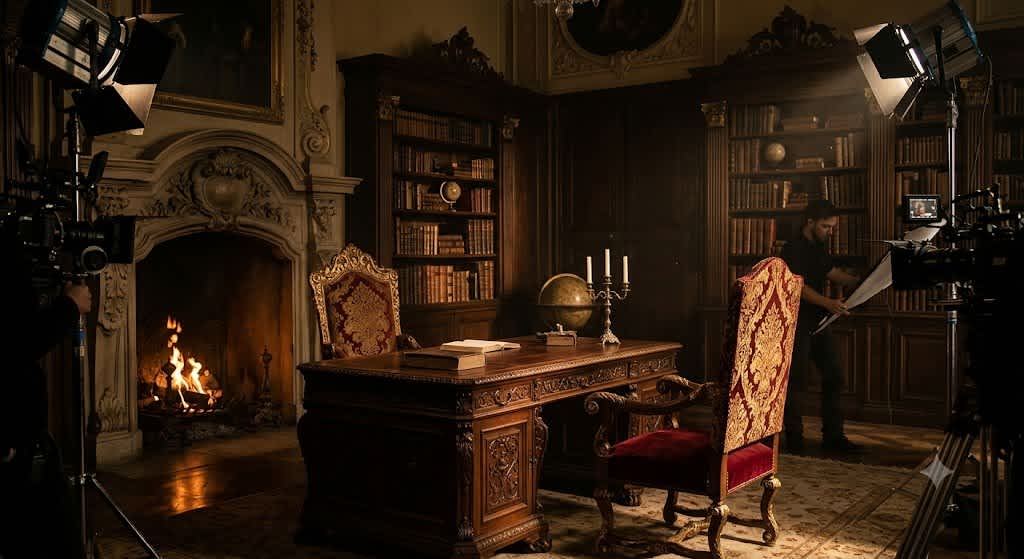
How Movie Furniture Shapes Cinematic Villainy and Dark Character Design
When an antagonist commands the silver screen, their presence is rarely a solo act. The tension that grips European audiences during a psychological thriller relies heavily on the environment. Directors manipulate atmospheric tension not just through standard scripts, but through the deliberate selection of iconic movie furniture.
To elevate a villain from a simple script archetype to an unforgettable force of nature, production designers frequently source high-end set pieces from specialized providers like Movieprops. The choice is rarely accidental. While heroes often occupy minimalist or utilitarian spaces, the quintessential cinematic antagonist almost always retreats to the shadow-draped, deeply carved world of the 17th century. By understanding the visual mechanics of cinematic villainy, filmmakers across the EU use these elaborate pieces to build immediate tension, silently communicating authority, obsession, and moral decay before a single line of dialogue is ever spoken.
The Psychology of Baroque Sets and Visual Authoritarianism
The historical roots of the Baroque style are steeped in the architecture of absolute power. Emerging in Europe during the Counter-Reformation, this design philosophy was weaponized by the monarchy and the Church to make individuals feel small, overwhelmed, and fundamentally powerless.
When applied to modern production design, Baroque sets do exactly the same thing. The heavy, gilded carvings and sweeping, aggressive curves project a distinct psychological profile:
- The Illusion of Absolute Control: The rigid symmetry and immense weight of a 17th-century European cabinet reflect an unyielding, authoritarian mindset.
- Grandeur Masking Decay: The sheer opulence of the wood and fabric hints at a character who prioritizes ancient wealth and institutional power over human life.
- Unpredictable Complexity: Unlike the clean, predictable lines of mid-century modern design, the intricate carvings offer no quick visual resolution, leaving the audience subconsciously on edge.
Chiaroscuro: Why Complex Lighting in Film Demands Deep Carvings
A flat surface reveals everything instantly. A deep, hand-carved piece of movie furniture, however, treats illumination as an active canvas. This interplay is where lighting in film becomes a narrative driver, relying heavily on chiaroscuro—the stark, high-contrast transition between bright light and deep shadow.
[Sharp Accent Light] ──> [Gilded Gilt / High Relief Carving] ──> [Cast Shadow in Recess]
When a high-contrast key light rakes across a heavily ornamented Baroque throne or high-backed chair, the deep recesses of the wood swallow the light entirely, while the polished, high-relief gold gilding reflects it with piercing intensity. This dramatic texture mimics the fractured morality of the antagonist sitting within it. The physical objects hide secrets in plain sight, ensuring that the environment itself mirrors the hidden, darker facets of the character’s psychology.
Sourcing the Perfect Hero Pieces for European Productions
For art directors and set decorators across the EU film industry, finding authentic, camera-ready set dressing is a critical logistical challenge. A generic reproduction can instantly shatter the illusion of ancient power on camera. This is why professional teams treat major set elements as hero pieces—singular objects that anchor an entire scene’s spatial layout and establish the emotional tone of the sequence.
When sourcing movie furniture for critical villain locations, filmmakers evaluate three primary elements:
- Scale and Proportions: The piece must dwarf the protagonist during confrontations, establishing a clear visual hierarchy.
- Material Integrity: Dark walnut, heavy oak, and tarnished gold leaf film beautifully under high-definition anamorphic lenses, revealing rich grains that digital textures cannot convincingly replicate.
- Historical Weight: Objects that carry a sense of heritage or historical lineage instantly give the antagonist an air of ancient, untouchable authority.
Conclusion: The Enduring Power of Dramatic Set Elements
Ultimately, the marriage between ornate European craftsmanship and dark cinematic themes is a timeless storytelling tool. The specific textures of high-end movie furniture do far more than simply fill out an empty soundstage or background space. They serve as an active mirror for the complex, authoritarian minds of cinema’s most enduring antagonists.
By strategically integrating genuine hero pieces and leveraging the shadow-catching depths of traditional European design, modern filmmakers can continue to craft unforgettable visual experiences. When a story demands deep tension, exquisite detail, and a lingering sense of dread, looking back to the dramatic weight of the classical era remains the ultimate creative solution.
Frequently Asked Questions
Why does movie furniture matter so much in modern character design?
Furniture defines how a character interacts with their immediate physical environment. A villain who sits rigidly in a massive, ornate European armchair projects a completely different psychological profile than one who lounges in an open, contemporary space. It acts as a silent extension of their internal motivations and worldview.
How do Baroque sets save time during a film shoot?
They provide immediate depth and texture. The high-relief details react naturally to standard cinematic light, allowing cinematographers to create moody, multi-layered frames without needing to deploy overly complex lighting grids or rely on heavy post-production digital adjustments.
Where can European filmmakers rent authentic movie furniture?
Professional art departments regularly collaborate with specialized rental houses like Movieprops to source verified historical items, high-fidelity replicas, and custom-modified set dressing designed to withstand the physical demands of a high-tier film set.